

Category: Collector’s Brief
Estimated reading time: 7–8 min
Marc Chagall’s graphic work occupies a distinctive position in the art market. It is accessible enough to attract new collectors, deep enough to interest experienced buyers, and complex enough to punish superficial acquisition. At first glance, collecting Chagall prints may seem straightforward: his name is internationally recognized, his visual language is immediately identifiable, and his lithographs appear regularly at auction. In reality, the market is layered, uneven, and highly dependent on quality, medium, edition, condition, signature, provenance, and subject.
This makes Chagall an unusually useful case for collectors. His graphic market combines three characteristics that rarely coexist so clearly: high availability, strong brand recognition, and meaningful internal hierarchy. A collector can enter the market at relatively modest levels, but the difference between an ordinary print, a strong original lithograph, a signed proof, an important illustrated-book plate, and a major sheet from a canonical series can be substantial.
The central question is therefore not simply: Should one collect Chagall prints?
The better question is: Which Chagall prints are worth collecting, at what price level, and with what expectations?
Why Chagall’s Prints Matter
Chagall was not a painter who casually made prints. Printmaking was central to his artistic language. His graphic work allowed him to translate the lyrical, floating, symbolic world of his paintings into a medium that could circulate more broadly. Lithography, in particular, suited his sensibility because it could carry colour, softness, drawing, and emotional atmosphere with unusual freedom.
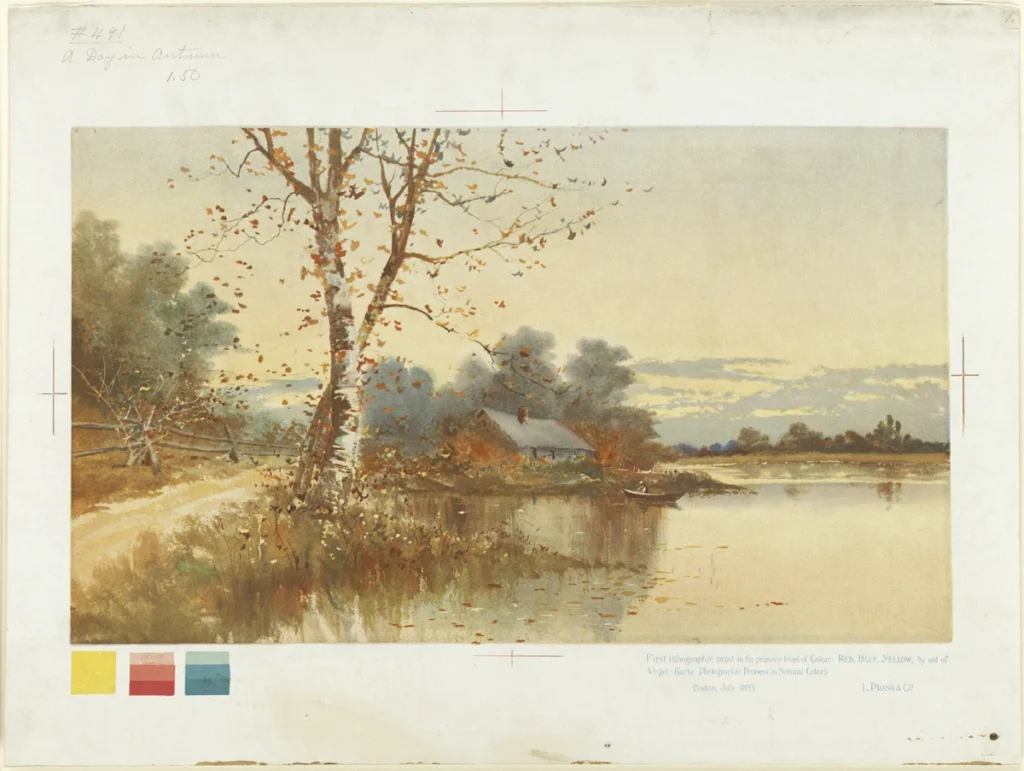
The technical nature of lithography matters here. The Metropolitan Museum of Art defines lithography as a planographic process in which a design is drawn onto a flat stone or prepared metal plate and fixed by chemical reaction; traditionally, the image is drawn directly on limestone with an oil-based lithographic crayon or ink. This is important because a true original lithograph is not just a mechanical reproduction of a painting. It is an original printmaking process with its own material and artistic logic.
For Chagall, this distinction is crucial. Many works circulating under his name are not equal. The market includes original lithographs, etchings, book illustrations, signed editions, unsigned plates, posters, later impressions, works “after Chagall,” and decorative reproductions. These categories can look similar to an inexperienced buyer, but they do not occupy the same market position.
A serious collector must therefore begin with taxonomy. Is the work an original lithograph created by Chagall? Is it a lithograph after a Chagall composition, executed by another hand such as Charles Sorlier? Is it an unsigned plate from an illustrated book? Is it a poster? Is it merely an offset reproduction? Is it signed in pencil by Chagall, signed in the plate, or not signed at all?
These distinctions are not academic. They determine price, liquidity, desirability, and long-term collectability.
The Main Categories of Chagall Graphics
The Chagall print market should be divided into several practical categories.
The first category is original signed and numbered lithographs or etchings. These are generally the most desirable for collectors who want a balance of accessibility and investment logic. They usually carry a clearer edition structure, stronger market comparability, and better resale prospects.
The second category is unsigned original lithographs from illustrated books and portfolios. These can be attractive and legitimate, especially when they come from important projects, but their market level is usually lower than signed examples. They can be excellent entry points if condition, provenance, and pricing are correct.
The third category is major graphic series, such as Daphnis et Chloé, biblical subjects, circus imagery, and other illustrated cycles. Christie’s describes Daphnis and Chloé as arguably Chagall’s finest lithographic series, while the National Gallery of Canada calls it widely considered the crowning achievement of his printmaking career. These series carry stronger art-historical and collector interest than generic isolated sheets.
The fourth category is works “after Chagall.” These may still be collectable, particularly when executed by skilled collaborators, published by reputable houses, and signed by Chagall. But they must not be priced as if they were entirely autograph original works.
The fifth category is posters and decorative reproductions. These can have visual charm and decorative value, but they are not the same as original fine-art prints. They should be bought for enjoyment, not confused with serious investment-grade graphic work.
A collector who fails to separate these categories can easily overpay.
Availability: Chagall Is Liquid, But Not Everything Is Important
One of the defining features of Chagall’s graphic market is availability. Unlike many modern masters whose works on paper rarely appear at accessible levels, Chagall prints are regularly offered across auction houses, online platforms, regional sales, and specialist print dealers.
This high availability is both an advantage and a risk.
It is an advantage because collectors can compare works, study price levels, and avoid rushing into the first available example. It is a risk because abundance can create confusion. The market contains many low-value reproductions and weaker examples, alongside genuinely desirable works.
Mark Littler’s 2025 market note states that prints account for 87% of Chagall’s works sold at auction, with average print prices generally between £1,000 and £5,000. This is a key signal: Chagall’s print market is not peripheral. It is the dominant visible part of his auction activity by number of lots.
However, the average range can be misleading. Phillips’ public past-lot examples show lower and mid-tier Chagall prints estimated from a few thousand dollars up to the low tens of thousands, including examples from Daphnis et Chloé, Le Cirque, The Bible Series, and other recognized bodies of work. Lempertz records many Chagall graphic works selling in the €10,000–€26,000 range, including examples such as Les Fleurs rouges, Les Arums, Le Magicien de Paris I, and Die Bucht der Engel. Heritage Auctions similarly shows signed Chagall lithographs achieving results around $15,000–$23,750 across 2013–2025 for selected examples.
The conclusion is simple but important: Chagall graphics are accessible, but the good material is not cheap. The market has a broad base and a meaningful upper tier.
Price Development Over the Last 30 Years
A precise 30-year price index for Chagall prints requires paid databases such as Artprice, Artnet, or auction-house archival data. Public sources do not provide a complete, clean, free, 1995–2025 time series by category, medium, edition type, and condition. Therefore, the responsible conclusion must be analytical rather than falsely exact.
Still, the available evidence allows a clear market interpretation.
Over the last 30 years, the market for Chagall prints has moved through three broad phases.
The first phase, roughly from the mid-1990s to early 2000s, was a posthumous consolidation phase. Chagall had died in 1985, and the market gradually absorbed the scale of his graphic production. Cataloguing, dealer specialization, and auction comparability became increasingly important. Collectors began to distinguish more sharply between original lithographs, book plates, signed editions, posters, and reproductions.
The second phase, roughly 2005–2015, was marked by broader auction visibility and increased online transparency. As more data became accessible, pricing became less dependent on local dealer knowledge and more dependent on comparable sales. This did not automatically push all prices upward, but it made quality differences more visible.
The third phase, 2015–2025, shows a market that is mature, liquid, and resilient. Mark Littler’s market analysis, citing Artprice data, reports that turnover for Chagall prints reached £4.03 million in 2024, recovering from a pandemic-era low of £2.71 million in 2020. It also reports that lots offered increased from 1,014 in 2015 to 1,588 in 2024, a rise of about 56% in market activity.
That is not the same as saying every Chagall print rose sharply in price. The more accurate assessment is this:
The market has expanded in volume and transparency, while price growth has been selective.
The strongest works — signed, well-documented, low-edition, good-condition examples from desirable subjects or recognized series — have held or improved their position. Ordinary works, unsigned book plates, common posters, later impressions, and decorative reproductions remain widely available and much more price-sensitive.
In other words, the last 30 years did not produce one Chagall print market. They produced several.
What Drives Value in Chagall Prints
The most important value drivers are relatively clear.
Signature and edition matter. A pencil-signed and numbered print is generally more desirable than an unsigned example. But signature alone is not enough: it must be authentic, correctly placed, and supported by documentation.
Medium and originality matter. An original lithograph or etching occupies a stronger category than an offset reproduction. Works “after Chagall” must be evaluated separately and conservatively.
Series and subject matter. Lovers, flowers, biblical scenes, circus imagery, animals, musicians, floating figures, and luminous colour tend to align strongly with Chagall’s recognizable language. Major illustrated cycles such as Daphnis et Chloé command special attention because they combine literary, visual, and historical significance.
Condition matters intensely. Paper is fragile. Light staining, mat burn, fading, foxing, trimming, folds, adhesive residue, and poor framing can materially reduce value. This is particularly important for brightly coloured lithographs, where freshness of colour affects both visual quality and market desirability.
Provenance and documentation matter. A clean invoice, catalogue raisonné reference, gallery label, auction record, and condition report strengthen confidence. Without documentation, even an attractive work becomes harder to defend.
Freshness and supply matter. Because Chagall prints are abundant, common examples are not scarce. Scarcity emerges only at the level of high-quality impressions, desirable subjects, rare proofs, strong signatures, complete portfolios, and well-preserved works from major cycles.
A collector should not ask, “Is it Chagall?” only. The better question is: What kind of Chagall is it?

The Main Mistakes Collectors Make
The first mistake is buying the name instead of the work. Chagall’s name is powerful, but the market does not value all objects bearing his name equally. A weak reproduction with a printed signature is not comparable to a signed original lithograph.
The second mistake is ignoring condition. Many Chagall prints were framed for decades under poor conditions. Sunlight and acidic materials can damage paper and reduce colour intensity. A visually attractive work may be compromised if examined closely.
The third mistake is treating asking prices as market prices. Online listings often include aspirational prices. Auction results, dealer comparisons, and condition-adjusted comparables are more useful.
The fourth mistake is overpaying for common material. Because Chagall prints are widely available, scarcity should not be assumed. If a similar example can be found repeatedly, the buyer has negotiating power.
The fifth mistake is failing to distinguish between “signed in the plate,” “facsimile signature,” and “hand-signed in pencil.” These are not equivalent.
The sixth mistake is buying without a catalogue reference. For Chagall prints, references to Mourlot, Cramer, Sorlier, or other recognized catalogues can be important. A vague description such as “Chagall lithograph” is not enough.
A disciplined collector should request full details before acquisition: title, date, medium, sheet size, image size, edition, signature, publisher, printer, paper, catalogue raisonné reference, condition report, provenance, and framing history.
If the seller cannot provide basic information, the price should reflect that uncertainty.
Collecting Strategy: Entry, Core, and Advanced Levels
A practical Chagall print strategy can be divided into three levels.
The entry level includes unsigned original lithographs, book plates, and modestly priced works with decorative appeal. These can be suitable for collectors who want visual enjoyment and a first contact with Chagall’s graphic world. The key is not to overpay and not to mistake these works for investment-grade material.
The core collecting level includes signed and numbered original lithographs or etchings in good condition, with clear catalogue references and desirable imagery. This is the most balanced segment for many collectors: recognizable, liquid, and still more accessible than paintings or major works on paper.
The advanced level includes rare proofs, low-edition works, strong sheets from major cycles, complete portfolios, exceptional condition examples, and works with notable provenance. This segment requires deeper expertise, stronger due diligence, and a more serious budget.
The ideal collector does not need to buy at the highest level immediately. It is better to begin with a clear, well-documented, fairly priced work than to chase a supposedly rare piece without understanding the category.
Chagall rewards knowledge. The market is broad enough to provide many opportunities, but also broad enough to hide many traps.
Market Outlook
The outlook for Chagall prints is best described as stable but selective.
The artist’s global recognition is unlikely to disappear. His imagery remains accessible, emotionally direct, and immediately identifiable. His graphic output is large enough to sustain an active market and broad enough to support multiple collecting levels. Recent data suggest that the market remains active, with significant volume growth between 2015 and 2024 and recovery in turnover after the pandemic-era low.
But this does not mean indiscriminate appreciation. The supply of ordinary material is too large. Price growth will likely remain concentrated in works with strong category status: signed original lithographs, important series, desirable subjects, excellent condition, low editions, and credible provenance.
For collectors, this is not bad news. It means the market is readable. There is enough supply to compare. There is enough demand to support liquidity. There is enough hierarchy to reward careful selection.
The worst strategy is buying anything with the Chagall name.
The best strategy is buying the right work, at the right level, with the right documentation.
Conclusion: Chagall Prints Reward Discipline
Collecting Chagall prints is attractive because the market offers access to a major modern artist at levels far below his paintings. But accessibility should not be confused with simplicity.
The market is active, but uneven. It is liquid, but hierarchical. It is affordable at entry level, but demanding at the serious collecting level. Over the last 30 years, Chagall’s graphic market has become more transparent, more global, and more segmented. The last decade shows strong activity and resilience, but also confirms that value is concentrated in better-quality works.
For collectors, the lesson is clear.
Do not buy the signature alone.
Do not buy the image alone.
Do not buy the name alone.
Buy the category, condition, documentation, subject, and price logic.
A strong Chagall print can be a beautiful and defensible acquisition. A weak one can be an expensive decoration. The difference lies in discipline.
In the Chagall market, knowledge is not optional. It is the collector’s main protection.