
Category: Collector’s Brief
Estimated reading time: 7–8 min
Old Master paintings are among the most prestigious, complex, and demanding categories of the art market. They combine historical depth, material beauty, cultural authority, scarcity, and technical difficulty. Unlike prints or drawings, paintings occupy a different level of visibility: they are usually unique objects, physically present, visually dominant, and deeply tied to questions of attribution, condition, provenance, restoration, and long-term institutional relevance.
For collectors, the attraction is obvious. An Old Master painting is not simply an artwork. It is a historical object that has survived centuries of ownership, conservation, changing taste, political instability, and market revaluation. It can connect a private collection to the Renaissance, the Baroque, the Dutch Golden Age, French classicism, Spanish religious painting, British portraiture, or eighteenth-century landscape culture.
But this prestige comes with risk. Old Master paintings are rarely straightforward acquisitions. Their market depends on knowledge, not speed. A collector must understand attribution language, workshop practice, condition issues, historical provenance, export restrictions, authenticity debates, and the difference between a decorative old painting and a serious collecting object.
The recent market context makes the category even more interesting. After a difficult period for the global art market, demand has become more selective, but strong works with rarity, provenance, and freshness to market are attracting serious attention. The broader art market declined in 2024, with global sales reportedly down 12% to $57.5 billion and works above $10 million falling sharply, yet the following year showed signs of recovery, with the 2025 market reported up 4% to $59.6 billion and public auctions growing 9%.
This matters for Old Masters because the category behaves differently from fashion-driven contemporary art. Its strongest works are scarce, often museum-held, and rarely available. When a major painting appears with strong provenance and credible attribution, collectors still compete.
The central question is therefore not:
Are Old Master paintings rising?
The better question is:
Which Old Master paintings are rising, why, and under what conditions?
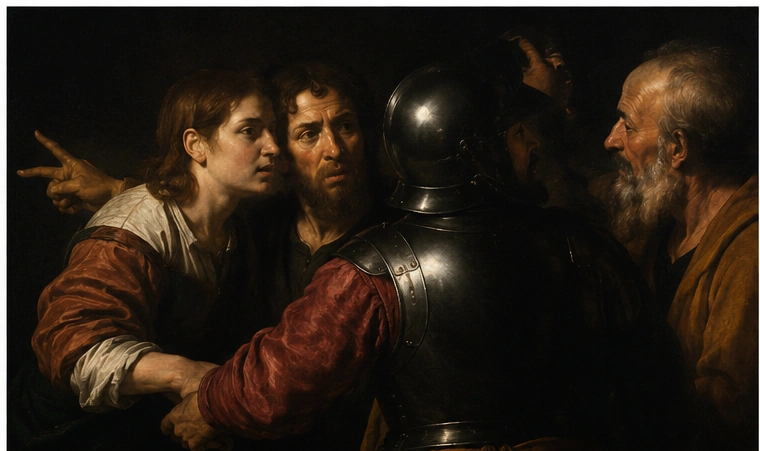
Why Old Master Paintings Are Different
Old Master paintings differ from other collecting categories because they are unique objects with long historical lives. A print may exist in multiple impressions. A drawing may be a preparatory study. A painting, especially a finished oil on panel or canvas, usually carries a different level of objecthood and market consequence.
The value of an Old Master painting is built through several layers:
artist or attribution;
school and period;
subject;
quality;
condition;
provenance;
literature;
exhibition history;
scale;
support and medium;
restoration history;
institutional relevance.
These factors interact. A painting by a famous artist in poor condition may be less desirable than a painting by a less famous artist in exceptional state. A workshop painting may be valuable if the subject, quality, provenance, and historical context are strong. A fully autograph work by a canonical master may command a major price even if the composition is modest, simply because the supply of securely attributed works is extremely limited.
This is the first rule of the category:
Old Master painting values are not linear.
The market does not price age alone. A seventeenth-century canvas is not automatically important. Many old paintings are decorative, damaged, over-restored, or weakly attributed. Conversely, a small, newly rediscovered, historically significant work can command intense attention if scholarship supports it.
The category rewards precision. “Italian school, seventeenth century” is not the same as “by Artemisia Gentileschi.” “Circle of Rembrandt” is not the same as “Rembrandt.” “Studio of Rubens” is not the same as “Peter Paul Rubens.” These distinctions can represent differences of millions.
Collectors must therefore read catalogue language with forensic care.
The Current Market: Rising Demand, But Only for the Right Works
Recent market news supports a cautious but positive view: demand and prices are rising for the best Old Master and historically important paintings, especially when the work is rare, fresh to market, rediscovered, well documented, or linked to a major artist.
A strong example is Titian’s The Rest on the Flight into Egypt, an early sixteenth-century painting with extraordinary provenance. The work came to market in 2024 after being held at Longleat House for generations and after a dramatic history that included theft and recovery. Reports before the sale described an estimate of up to about $32 million, and after the auction the work was reported sold for about $22.3 million / £15 million.
The Titian sale is important because it demonstrates the value of scarcity and provenance. The painting had not been available on the market for roughly 145 years. It had a story, a major name, an early date, and a documented chain of ownership. These factors made it legible to collectors even in a cautious market.
Another recent example is J.M.W. Turner’s The Rising Squall, Hot Wells, from St Vincent’s Rock, Bristol. The painting was rediscovered after being lost to Turner scholarship for more than 150 years. It had originally been misattributed and sold cheaply, but cleaning revealed Turner’s signature. The Guardian reported that Sotheby’s planned to auction it with an estimate of £200,000–£300,000; later reporting recorded that it sold for £1.9 million, several times expectation.
This is not a normal price rise. It is a reclassification event. The object moved from one market category into another: from misattributed follower work to authenticated early Turner. Such cases show why attribution is the most explosive value driver in Old Master paintings.
But the conclusion should be disciplined. These examples do not prove that every Old Master painting is rising. They prove something more specific:
The market is rewarding rarity, rediscovery, authorship, provenance, and fresh supply.
That is the real trend.
Italian Old Masters: Highest Prestige, Highest Attribution Pressure
Italian Old Master paintings remain among the most prestigious areas of the market, especially Renaissance and Baroque works. Names such as Leonardo, Raphael, Titian, Caravaggio, Artemisia Gentileschi, Guido Reni, Guercino, Canaletto, and Tiepolo carry powerful cultural weight.
However, the Italian market is also one of the most difficult. Workshop practice, later copies, studio replicas, historical restorations, and old attributions create complexity. A painting may have been catalogued differently across centuries. A work once called “school of” may later be upgraded, while another formerly accepted attribution may be questioned.
The highest prices are attached to works that combine:
secure attribution;
high quality;
important subject;
good condition;
strong provenance;
publication history;
freshness to market;
institutional relevance.
The Salvator Mundi case remains the most extreme example of the power and risk of attribution. The painting, attributed in whole or part to Leonardo da Vinci, sold at Christie’s in 2017 for $450.3 million, setting the highest public auction price for a painting; yet the attribution and restoration history remain subjects of debate.
That case should not be used as a normal market benchmark. It is too exceptional. But it does show how powerful the combination of rarity, authorship, restoration, marketing, and global visibility can become.
For ordinary collectors, Italian Old Master paintings are more accessible in lesser-known names, workshop works, regional schools, devotional subjects, and eighteenth-century views. But due diligence is non-negotiable. Italian paintings often have complex histories, and the difference between “attributed to,” “studio of,” “circle of,” and “after” can radically change value.
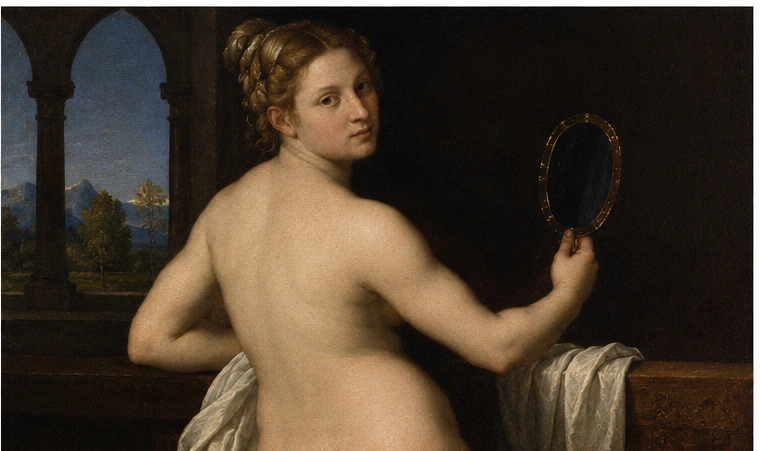
Dutch and Flemish Paintings: Still Life, Genre, Portraiture, and the Middle Market
The Dutch and Flemish schools offer one of the most attractive collecting areas within Old Master paintings. They include Rembrandt, Rubens, Van Dyck, Frans Hals, Jan Steen, Pieter de Hooch, Gerrit Dou, Aelbert Cuyp, Jacob van Ruisdael, Jan Davidsz. de Heem, Rachel Ruysch, Maria van Oosterwijck, and many other painters whose markets vary dramatically.
This category has several advantages.
First, the range is broad. Collectors can focus on portraiture, still life, landscape, maritime painting, interiors, genre scenes, animal painting, or religious subjects.
Second, the middle market can be more accessible than the top Italian Renaissance market. A serious Dutch or Flemish painting by a good but less famous artist may be more attainable than an Italian work with a major attribution.
Third, subjects can be visually attractive for private interiors: still lifes, landscapes, flowers, banquets, and domestic scenes often fit contemporary collecting environments better than large religious altarpieces.
Fourth, scholarship and museum comparability are strong. Dutch and Flemish paintings are well studied, and public collections provide many reference points.
Recent attention to Jan Davidsz. de Heem shows the strength of this area. A rare group of his still lifes was reunited for the Fitzwilliam Museum’s 2024–2025 exhibition Picturing Excess, and earlier reporting noted that a major de Heem Banquet Still Life had been valued around £6.1 million when subject to a UK export bar and later loaned for public exhibition.
For collectors, Dutch and Flemish still lifes are particularly interesting because they combine technical virtuosity, symbolic complexity, and decorative power. But they also require careful condition review. Dark backgrounds, old varnish, overcleaning, panel movement, and old restorations can strongly affect value.
Size, Subject, and Domestic Fit
Size is a practical but often underestimated factor in Old Master painting collecting.
Large altarpieces, full-length portraits, and monumental mythological scenes may be historically important, but they are difficult for private collectors to display. They require high ceilings, controlled light, specialized installation, and sometimes institutional-scale conservation. Their buyer base can be narrower.
Smaller cabinet paintings, portraits, still lifes, landscapes, and devotional panels can be more liquid because they fit private interiors. This does not mean they are automatically more valuable, but it affects demand.
Subject also matters.
The strongest subjects often include:
Madonna and Child;
Saints and biblical scenes;
mythology;
portraits with strong identity or costume;
Dutch Golden Age still life;
landscape by recognized hands;
Venetian views;
Caravaggist dramatic scenes;
animal and hunting scenes;
eighteenth-century vedute;
female portraiture;
works with recognizable iconography.
However, taste changes. Some religious subjects that were once central can be less attractive to contemporary private buyers unless the quality and attribution are exceptional. Conversely, still life and landscape have become easier for modern collectors to integrate into homes.
The market increasingly rewards paintings that combine historical importance with visual usability.
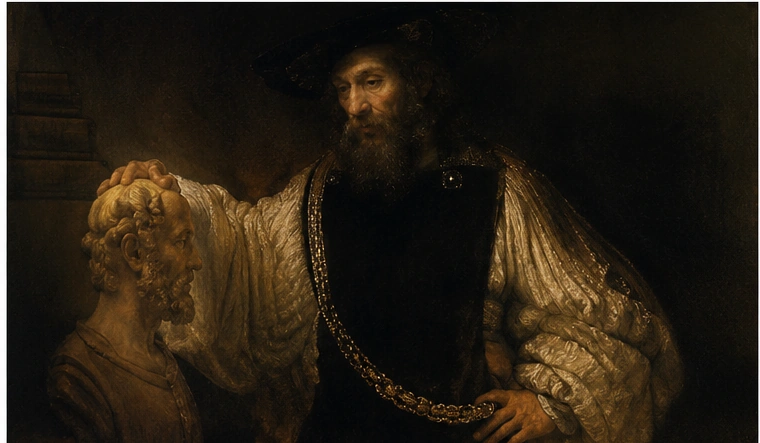
Provenance: The Core of Trust
Provenance is central in Old Master paintings. It is not a decorative detail. It is one of the main structures of value.
A painting with a documented chain of ownership is easier to defend. A work that appears in historical inventories, old sale catalogues, family collections, museum exhibitions, scholarly literature, or well-known private collections carries greater credibility. Provenance can also help establish authorship, date, and historical importance.
But provenance can also create risk. Old Master paintings may involve restitution issues, wartime loss, forced sales, colonial-era transfers, unclear export history, or gaps in ownership. A prestigious old collection does not automatically eliminate legal risk.
Collectors should request:
full provenance;
old labels and inscriptions;
sale history;
exhibition history;
literature references;
condition reports;
export documentation;
technical analysis if available;
restoration history;
photographs before and after cleaning.
The Titian case demonstrates how provenance can become part of market value. Its history through aristocratic and imperial collections, theft, recovery, and long-term private holding made the painting more than an image: it became a historical object with a narrative.
For serious collecting, provenance is not optional. It is part of the artwork.
Attribution and Technical Analysis
Attribution is the most dramatic value driver in Old Master paintings. It can create enormous upside, but it is also the greatest risk.
A painting can move through several attribution categories:
by the artist;
signed by the artist;
attributed to;
studio of;
workshop of;
circle of;
follower of;
after;
copy after;
school of.
Each phrase carries market consequences. “Studio of Van Dyck” and “Van Dyck” are different financial worlds. “Circle of Rembrandt” and “Rembrandt” are not minor variations. They may differ by orders of magnitude.
Recent news around AI and technical analysis has made this even more visible. A 2025 Guardian report described an AI-supported authentication claim for a painting long dismissed as a copy “after Caravaggio,” suggesting how new technologies can intensify attribution debates. That does not mean AI alone should determine attribution; it means technical and computational tools are now part of the broader evidentiary environment.
The best practice is layered evidence:
connoisseurship;
provenance;
technical imaging;
pigment analysis;
dendrochronology for panels;
canvas analysis;
x-radiography;
infrared reflectography;
comparison with accepted works;
scholarly consensus.
Collectors should be skeptical of dramatic attribution claims unsupported by serious evidence. The market rewards discoveries, but it also punishes wishful thinking.
Condition and Restoration: Beauty Can Be Reconstructed
Condition is decisive in Old Master paintings because most works have lived long material lives. They may have been cleaned, relined, transferred, overpainted, cut down, enlarged, patched, revarnished, or restored many times.
A painting may look beautiful under gallery lighting but contain extensive restoration. Conversely, a dirty, neglected painting may have excellent underlying quality if conservation potential is strong.
Common condition issues include:
old yellow varnish;
overcleaning;
abrasion;
paint loss;
retouching;
relined canvas;
panel cracks;
woodworm damage;
lifting paint;
old overpaint;
changed dimensions;
unstable support;
surface blanching;
frame damage.
A condition report should not be treated as a formality. It is a pricing document. A painting with heavy restoration can still be collectable, but the price must reflect the risk. A painting with excellent condition and minimal intervention can command a premium.
Collectors should be especially careful with dramatic “rediscoveries.” Cleaning can reveal quality, but it can also reveal damage. Technical examination before purchase is essential for serious works.
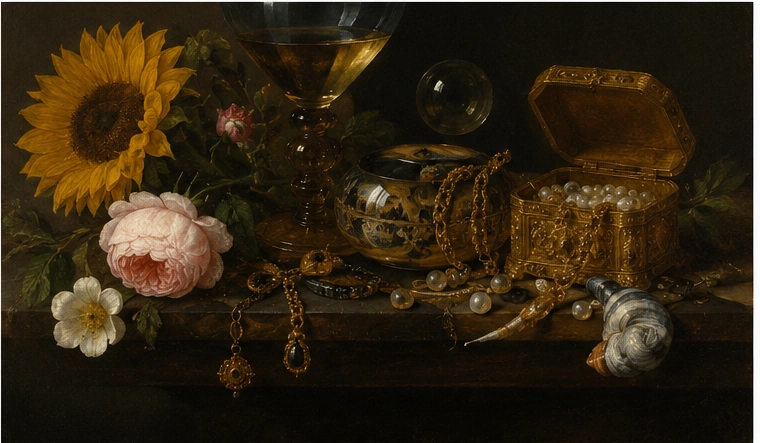
How to Build a Focused Collection
A collector should not begin by trying to buy “Old Masters” in general. The field is too broad and too technical. A strong collection requires a thesis.
Possible collecting strategies:
Italian Baroque devotional paintings
Focused on saints, half-length figures, Caravaggist drama, and strong chiaroscuro.
Dutch and Flemish still life
Focused on flowers, vanitas, banquet still lifes, fruit, game, and symbolic objects.
Northern landscape painting
Focused on seventeenth-century Dutch and Flemish landscape traditions.
Portraiture c. 1600–1800
Focused on identity, costume, social status, and provenance.
Women Old Masters
Focused on artists such as Artemisia Gentileschi, Rachel Ruysch, Maria van Oosterwijck, Lavinia Fontana, Sofonisba Anguissola, and others.
Rediscovery and attribution-focused collecting
Higher risk, but potentially high upside if supported by scholarship and technical analysis.
The strongest thesis balances taste and discipline. It should be narrow enough to guide acquisition and broad enough to allow opportunity.
A weak strategy: “I want old paintings.”
A stronger strategy: “I collect seventeenth-century Dutch and Flemish still lifes with strong condition, symbolic content, and documented provenance.”
An even stronger strategy: “I focus on cabinet-scale Dutch and Flemish still lifes and vanitas paintings suitable for private interiors, with preference for works by documented artists and clear sale history.”
Precision improves the collection.
Price Levels and Accessibility
Old Master paintings exist across a wide price spectrum.
At the top, major works by Leonardo, Titian, Rembrandt, Rubens, Caravaggio, Velázquez, or Vermeer are effectively museum-level assets and rarely available. When they appear, they can produce exceptional prices.
The upper market includes significant works by major artists, fresh-to-market paintings, and works with distinguished provenance. These can range from high six figures to tens of millions.
The middle market includes strong paintings by recognized but less famous artists, good workshop works, regional schools, portraits, landscapes, and still lifes. This is where many serious private collectors operate.
The entry level includes smaller devotional works, anonymous school paintings, follower works, and decorative examples. These can be attractive, but they require careful pricing and should not be bought as if they were investment-grade works.
The current market recovery does not lift all levels equally. It strengthens the top and the quality middle first. Weak attributions, damaged works, and generic decorative paintings remain price-sensitive.
This is why a collector should not ask only whether Old Masters are “rising.” The better question is whether the specific painting belongs to a rising segment.
Common Mistakes Collectors Make
The first mistake is buying age instead of quality. Old does not mean important.
The second mistake is trusting attribution language without understanding it. “Attributed to” is not “by.”
The third mistake is ignoring condition. Restoration can materially change value.
The fourth mistake is underestimating provenance risk. Gaps in ownership are not harmless.
The fifth mistake is buying overly large works without considering display, insurance, transport, and resale.
The sixth mistake is confusing decorative appeal with market depth. A painting can be beautiful but illiquid.
The seventh mistake is relying only on dealer narrative. Independent expertise matters.
The eighth mistake is assuming market growth is universal. Recent demand is real, but selective.
A disciplined collector should always ask:
Who is the artist, and how secure is the attribution?
What is the subject?
Is the painting autograph, workshop, circle, follower, or copy?
What is the condition?
What is the provenance?
Has it been published or exhibited?
Is the size practical?
Is the price supported by comparable works?
What would make this painting desirable to the next buyer?
If the seller cannot answer these questions clearly, the risk increases.
Conclusion: Demand Is Rising, But Selectively
Old Master paintings are experiencing renewed attention because collectors are increasingly looking for rarity, history, material presence, and long-term cultural value. Recent sales and rediscoveries show that the market will still pay strongly for works with exceptional authorship, provenance, freshness, and scholarly support.
But the growth is selective.
The market is not rewarding every old painting. It is rewarding the right old paintings: rare, well-preserved, well-documented, intellectually defensible, and visually compelling works.
For collectors, this is good news. A selective market is not a closed market. It is a knowledge market. It gives an advantage to buyers who understand attribution, condition, provenance, and category hierarchy.
Old Master paintings require more due diligence than many other fields. They are slower to evaluate, harder to authenticate, and more complex to price. But when chosen well, they offer something few collecting categories can match: the possibility of owning a unique object with centuries of cultural memory.
In the current market, the strongest Old Master paintings are not merely surviving. They are becoming more attractive to collectors seeking substance over fashion.
That is why the category deserves renewed attention.
Selected Sources
- Art Basel & UBS / Financial Times — recent global art market recovery data.
- Christie’s — Titian, The Rest on the Flight into Egypt, sale context.
- Sotheby’s / Guardian — Turner, The Rising Squall, rediscovery and auction context.
- The Metropolitan Museum of Art — Caravaggio and Rembrandt collection records.
- National Gallery of Art — Titian, Venus with a Mirror.
- Rijksmuseum — Dutch still life examples and institutional collecting context.
- The Guardian — recent attribution and authentication discussions around Caravaggio-related material.