

Category: Collector’s Brief
Estimated reading time: 7–8 min
Old Master drawings occupy a special place in the art market because they bring the collector closer to the artist’s hand than almost any other medium. A painting often represents a completed public object. A drawing may reveal thinking, correction, invention, hesitation, speed, and technical discipline. It can be a preparatory study, an independent work, a studio exercise, a compositional idea, a figure study, a portrait, a landscape, or a finished presentation sheet.
For collectors, drawings on paper offer access to major artistic traditions at price levels that are often more approachable than paintings. Yet this accessibility is deceptive. The market for Old Master drawings is extremely knowledge-dependent. Two sheets of similar size, age, and medium may differ radically in value because of attribution, function, condition, provenance, subject, and relationship to a known painting, fresco, sculpture, or decorative project.
The comparison between Italian and French Old Master drawings is especially useful. These two schools often attract overlapping collectors, but they operate according to different artistic logics and market expectations. Italian drawings are frequently connected with the Renaissance and Baroque systems of workshop practice, religious commissions, fresco cycles, and figure invention. French drawings, especially from the seventeenth and eighteenth centuries, are often associated with academic discipline, court culture, theatre, portraiture, ornament, landscape, and Rococo refinement.
The central question is therefore not simply:
Is this an Old Master drawing?
The better question is:
What school, function, subject, date, medium, size, condition, and level of attribution does this sheet represent — and how does that affect value?
Why Drawings Matter to Collectors
A drawing is not merely a lesser painting. It is a different kind of object. Its value often lies in immediacy: the direct trace of the artist’s thought. This is why drawings can be so attractive to serious collectors. They show not only what an artist made, but how an artist saw.
Christie’s describes Old Master drawings as objects that capture “the immediacy of the artist’s hand,” ranging from affordable sketches to museum-quality masterpieces. The same guide emphasizes that drawings are closely linked to the historical conditions of the country in which they were produced. Italian drawings, for example, often reflect the influence of the Church and major ecclesiastical commissions, while French drawings were shaped by classicism, academic discipline, and later Rococo taste.
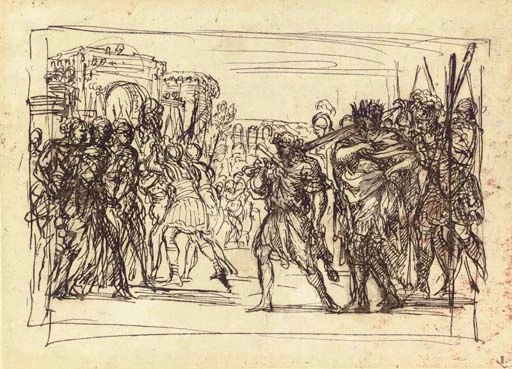
This national and institutional context matters because it affects the function of the sheet. An Italian drawing may be a study for a fresco, an altarpiece, a figure in a larger religious composition, or a rapid invention in pen and ink. A French drawing may be a study for a painting, a theatre figure, an ornamental design, an academic nude, a portrait head, or a highly finished sheet intended for collectors.
Collectors should therefore begin by asking what the drawing was for.
Was it preparatory?
Was it independent?
Was it made for the studio?
Was it made for a patron?
Was it part of academic training?
Was it a finished collector’s object?
Was it connected to a known commission?
Function is not a minor detail. It affects rarity, desirability, and price.
Italian Drawings: Invention, Figure Study, and Ecclesiastical Patronage
Italian Old Master drawings are often valued for their connection to artistic invention. In the Renaissance and Baroque periods, drawing was central to the development of large-scale works: frescoes, altarpieces, devotional paintings, architectural projects, sculpture, and decorative cycles.
Christie’s notes that Italian drawings show the influence of the Church, which played a major role in artistic patronage; important ecclesiastical commissions required extensive preparation, and many Italian Old Master drawings are figure studies or compositional sketches for larger works.
This explains why so many Italian sheets are studies of heads, hands, feet, drapery, saints, angels, apostles, allegorical figures, and compositional arrangements. The drawing may seem modest, but if it can be linked to a major painting, fresco, or chapel project, its significance can increase dramatically.
The strongest Italian drawings usually possess at least one of the following qualities:
direct connection to a major work;
high level of attribution;
powerful figure invention;
recognizable hand of a major master;
strong provenance;
good condition;
important collection history;
rare survival.
The market responds intensely to these factors. Raphael’s Head of a Muse, a study for a figure in the Vatican fresco Parnassus, sold at Christie’s London in 2009 for £29.2 million, setting a record for an Old Master drawing at auction. Guinness World Records identifies this as the most expensive Old Master drawing sold at auction and specifies its function as a study for the Vatican fresco commissioned by Pope Julius II.
The lesson is clear: in Italian drawings, connection to a canonical project can transform a sheet from beautiful object into historical document.
French Drawings: Refinement, Theatre, Portraiture, and Academic Discipline
French Old Master drawings operate differently. They are often less about the dramatic invention of a large ecclesiastical composition and more about elegance, discipline, characterization, surface, gesture, and cultural setting.
This is not a weaker tradition. It is a different one.
The French school includes seventeenth-century classicism, the academic culture of the Académie Royale, courtly decoration, theatrical studies, eighteenth-century Rococo sensibility, portraiture, landscape, ornament, and highly finished drawings for collectors. Artists such as Simon Vouet, Charles Le Brun, Antoine Watteau, François Boucher, Jean-Honoré Fragonard, Hubert Robert, Gabriel de Saint-Aubin, and Pierre-Paul Prud’hon occupy different parts of this field.
Christie’s guide notes that French drawings share some preparatory logic with Italian drawings, but seventeenth-century French classicism generally produced works less Baroque in movement than Italian examples. Sotheby’s describes François Boucher, together with Watteau and Fragonard, as defining the taste, culture and refinement of eighteenth-century France, and calls Boucher one of the great draughtsmen of his time.
French drawings are particularly strong in several categories:
red chalk figure studies;
theatrical and commedia dell’arte subjects;
female nudes and mythological studies;
portrait heads;
ornamental designs;
landscapes and architectural capricci;
finished presentation drawings;
Rococo and Neoclassical studies.
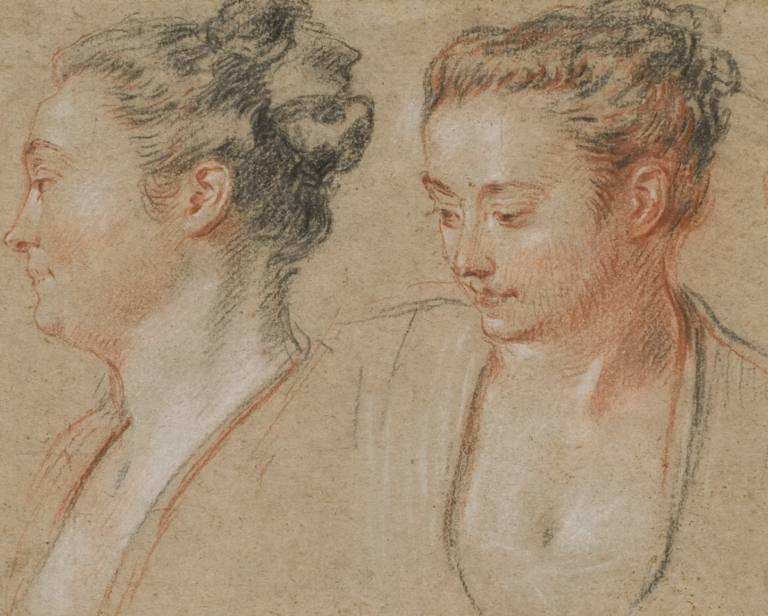
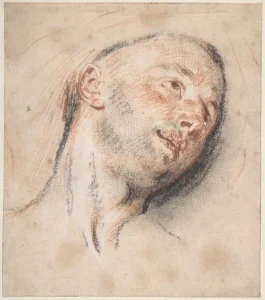
Watteau is especially important because his drawings often stand at the intersection of theatre, gesture, character, and Rococo invention. Sotheby’s past-lot archive lists multiple Watteau drawings with estimates in the six-figure range, including actor studies, figure sheets, and commedia-related subjects.
In the French market, grace, finish, subject, and recognizability can matter as much as connection to a known final painting.
Price Comparison: Italian School vs French School
The market for Italian and French Old Master drawings cannot be reduced to one price chart. Prices depend on attribution, subject, quality, condition, provenance, and connection to known works. Still, several broad patterns are visible.
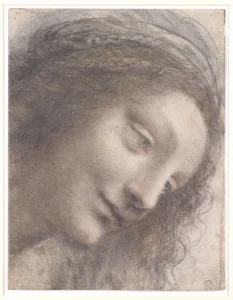
At the absolute top of the market, Italian Renaissance names dominate. Michelangelo, Raphael, Leonardo, and major High Renaissance or Mannerist sheets occupy a level that French drawings rarely reach. This is due to a combination of scarcity, historical centrality, museum demand, and the almost complete absorption of major Italian Renaissance drawings into public collections.
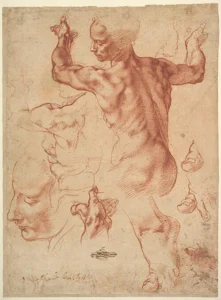
The Raphael Head of a Muse at £29.2 million illustrates this top tier. A Michelangelo red-chalk study for the foot of the Libyan Sibyl sold at Christie’s New York in 2026 for $27.2 million, exceeding its high estimate of $2 million by more than thirteen times, according to the Wall Street Journal.
However, this does not mean all Italian drawings are expensive. Many Italian school drawings by lesser-known artists, followers, workshops, or later hands can trade in the low thousands or tens of thousands. Christie’s guide gives a useful contemporary example: Giovanni Domenico Tiepolo’s The Holy Family with angels during the Flight into Egypt, a black chalk, pen-and-brown-ink and wash drawing measuring 48.3 × 37.9 cm, sold for €57,150 in Paris in March 2026.
French drawings, by contrast, often have a strong middle and upper-middle market. Major Watteau, Boucher, Fragonard, and Hubert Robert drawings can reach substantial six-figure or higher levels, especially when fresh, well-provenanced, and visually refined. Sotheby’s archive lists Watteau drawings with estimates such as £350,000–450,000, €500,000–800,000, and $300,000–500,000 for important sheets.
At a more accessible level, French drawings by known but less rare artists, or smaller studies by major names, may appear in the tens of thousands. Christie’s guide cites a Simon Vouet study, Study of a half-length nude woman, black chalk heightened with white on light brown paper, 23.8 × 18.5 cm, sold for €33,020 in Paris in March 2026.
The practical conclusion:
Italian drawings have the highest ceiling. French drawings often offer broader collectability in the middle market.
Themes: What Collectors Actually Buy
Theme is a major value driver.
Italian drawings often attract collectors when they show:
saints and apostles;
Madonna and Child studies;
angels and putti;
martyrdoms and biblical narratives;
anatomical studies;
drapery studies;
heads and hands;
compositional studies for altarpieces;
studies connected to fresco cycles;
mythological or allegorical figures.
The most desirable Italian subjects are often those that demonstrate artistic invention. A study of a hand can be extraordinary if it belongs to a major composition. A small foot study can become a record-breaking object if it is linked to the Sistine Chapel.
French drawings often attract collectors through different themes:
theatre and commedia dell’arte;
elegant figures and actors;
female nudes;
portraits and head studies;
mythological lovers;
pastoral scenes;
ornamental designs;
landscapes and ruins;
academic studies;
Rococo interiors and decorative projects.
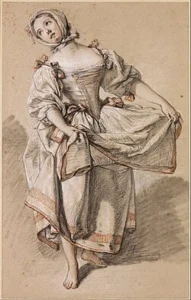
Watteau’s market shows the strength of theatrical and figure subjects. Sotheby’s archive includes multiple Watteau figure studies: actors, musicians, elegant men, and commedia-related characters. Boucher’s market is often tied to chalk mastery, sensual figure studies, mythological subjects, and decorative elegance; a Christie’s lot for Boucher’s A female Nude playing on a Pipe records the medium as black, red, white and coloured chalk on light brown paper, measuring 246 × 360 mm.
For collectors, the theme must be read together with function. A French theatrical figure may be more collectable than a generic religious study. An Italian drapery study may be more important than a finished decorative sheet if it is linked to a major altarpiece.
Sheet Size: Why Dimensions Matter
Size matters, but not mechanically.
Old Master drawings are often smaller than contemporary collectors expect. A historically important sheet may measure less than a modern book page. Raphael’s Head of a Muse was described in an early source as approximately 12 × 9 inches, and The Guardian reported before the 2009 sale that it measured just over 30 × 22 cm. The 2026 Michelangelo foot drawing was reported as approximately five inches in size, yet sold for $27.2 million.
This is a crucial point for collectors: small does not mean minor.
In Italian drawings, small sheets can be extremely important if they are connected to major projects. A head, foot, hand, or torso study may be more valuable than a larger but generic drawing.
French drawings often have a somewhat different market logic. Larger, finished, visually attractive sheets can be highly desirable, especially when they display refinement, decorative appeal, and strong condition. The Boucher example cited above measures 246 × 360 mm, while Christie’s 2026 Tiepolo example measures 48.3 × 37.9 cm.
Typical practical size categories:
| Category | Approximate size | Market interpretation |
|---|---|---|
| Small study | under 20 cm on one side | Can be major if attribution and function are strong |
| Standard collector sheet | 20–40 cm | Most common serious collecting range |
| Large sheet | 40–60 cm | Often more visually impressive, but condition risk increases |
| Oversized drawing | above 60 cm | Rare, difficult to preserve, often expensive if important |
Size also affects conservation. Larger sheets may have more condition issues: folds, tears, mounting problems, or paper distortion. Smaller sheets may be trimmed or have lost margins. Therefore, dimensions should always be checked against original function and condition.
Successful Sales: What They Reveal
Successful sales show what the market rewards.
The Raphael Head of a Muse demonstrates the premium attached to a major Renaissance artist, direct connection to a Vatican fresco, distinguished provenance, and scholarly consensus. Its £29.2 million result is not representative of the average drawing market; it represents the absolute top of the field.
The 2026 Michelangelo foot study shows the same principle in even more concentrated form: very small size, but direct connection to the Sistine Chapel, extreme rarity, and rediscovery narrative. The reported $27.2 million result demonstrates that function and historical link can outweigh scale.
The Tiepolo and Vouet results from Christie’s 2026 guide show the middle-market reality: strong drawings by recognized Old Master artists can sell in the €30,000–€60,000 range when the sheet is attractive, properly catalogued, and aligned with collecting taste.
The Watteau archive at Sotheby’s shows that important French eighteenth-century drawings can occupy a more expensive tier, with recurring six-figure estimates for actor studies, head studies, commedia subjects, and elegant figure sheets.
Taken together, these sales indicate four market rules:
- Top Italian Renaissance drawings dominate the record level.
- French eighteenth-century drawings are highly collectable when refined, theatrical, and fresh to market.
- Size is secondary to attribution, subject, function, and provenance.
- The middle market remains active for well-catalogued sheets by recognized but less rare artists.
Condition, Attribution, and Provenance
Condition is especially important in drawings because paper is fragile. Collectors must check staining, foxing, fading, tears, trimming, mount damage, backing, retouching, oxidation, and old restorations. Chalk drawings can be vulnerable to rubbing. Iron gall ink can corrode paper. Washed drawings may lose tonal subtlety. Laid paper may reveal useful watermarks, but also centuries of handling.
Attribution is equally decisive. A drawing can be catalogued as:
by the artist;
attributed to;
circle of;
school of;
follower of;
after;
studio of.
Each phrase has market consequences. “By Raphael” and “school of Raphael” are not minor differences; they are different markets.
Provenance can also transform a drawing. Old collector stamps, historic mounts, inscriptions, exhibition history, and references in catalogues all strengthen credibility. Christie’s Old Master drawings department emphasizes its role in record-setting sales and important collections, which reflects how central provenance and specialist cataloguing are to this market.
A serious buyer should always request:
high-resolution images front and back;
full dimensions of sheet and image;
medium;
condition report;
provenance;
literature;
exhibition history;
watermark information if relevant;
mounting history;
attribution basis;
comparison with related works.
Without this information, pricing becomes speculation.
How to Build a Focused Collection
A collector should avoid buying broadly and vaguely. “Old Master drawings” is too large a field. A stronger strategy would define school, period, function, medium, and price level.
Possible Italian-focused thesis:
Italian figure studies and compositional drawings, c. 1550–1700, connected to religious and mythological painting.
Possible French-focused thesis:
French figure and theatre studies, c. 1650–1800, with emphasis on chalk drawings, portrait heads, and Rococo character.
Possible comparative thesis:
Drawing as artistic thought: Italian preparatory invention and French refinement from the Baroque to the Rococo.
The comparative thesis is especially strong for a private collection because it allows visual and intellectual contrast. Italian sheets can show structure, anatomy, sacred drama, and compositional force. French sheets can show elegance, psychology, theatre, and surface refinement.
A collection built this way would not merely accumulate drawings. It would tell a story about different European systems of artistic thinking.
Conclusion: Two Schools, Two Market Logics
Italian and French Old Master drawings reward different kinds of attention.
Italian drawings often command value through invention, rarity, connection to major commissions, and the authority of Renaissance and Baroque masters. The highest prices in the market tend to belong to the Italian school when the artist is canonical and the sheet is connected to a major historical project.
French drawings often reward refinement, finish, theatricality, academic discipline, and collector appeal. Their market is broad, sophisticated, and especially strong in the eighteenth century, where artists such as Watteau, Boucher, Fragonard, and Hubert Robert offer a rich field for collectors.
The Italian school has the higher ceiling.
The French school often offers broader middle-market opportunity.
For collectors, the key is not to choose one school mechanically. The key is to understand what each school values.
Italian: invention, anatomy, composition, sacred and mythological function.
French: elegance, character, theatre, finish, academic and courtly culture.
In both markets, the same rules remain decisive: attribution, condition, provenance, subject, function, and price discipline.
A strong drawing is never just old paper. It is evidence of thought.
And in the market for Old Master drawings, the most valuable thing a collector can bring is not money alone — it is judgment.
Selected Sources
- Christie’s — A collector’s guide to Old Master drawings.
- Christie’s — Old Master Drawings department and selected lot records.
- Sotheby’s — Jean-Antoine Watteau past-lot archive.
- The Metropolitan Museum of Art — Michelangelo, Studies for the Libyan Sibyl.
- The Metropolitan Museum of Art — Antoine Watteau, Head of a Man.
- Guinness World Records — Raphael Head of a Muse auction record.
- Christie’s — Raphael Head of a Muse lot essay.
- The Wall Street Journal — 2026 Michelangelo drawing auction result.